Factory-Direct Divided Food Packaging Series
Precision-engineered multi-compartment containers designed for strict portion control, non-cross-contamination meal delivery, and high-speed automated packaging lines.


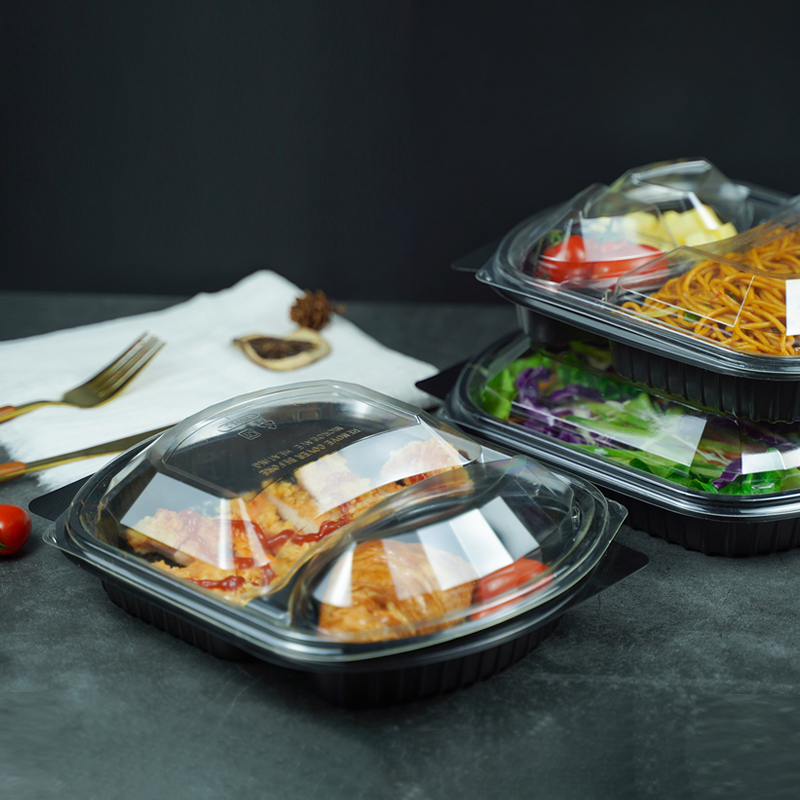


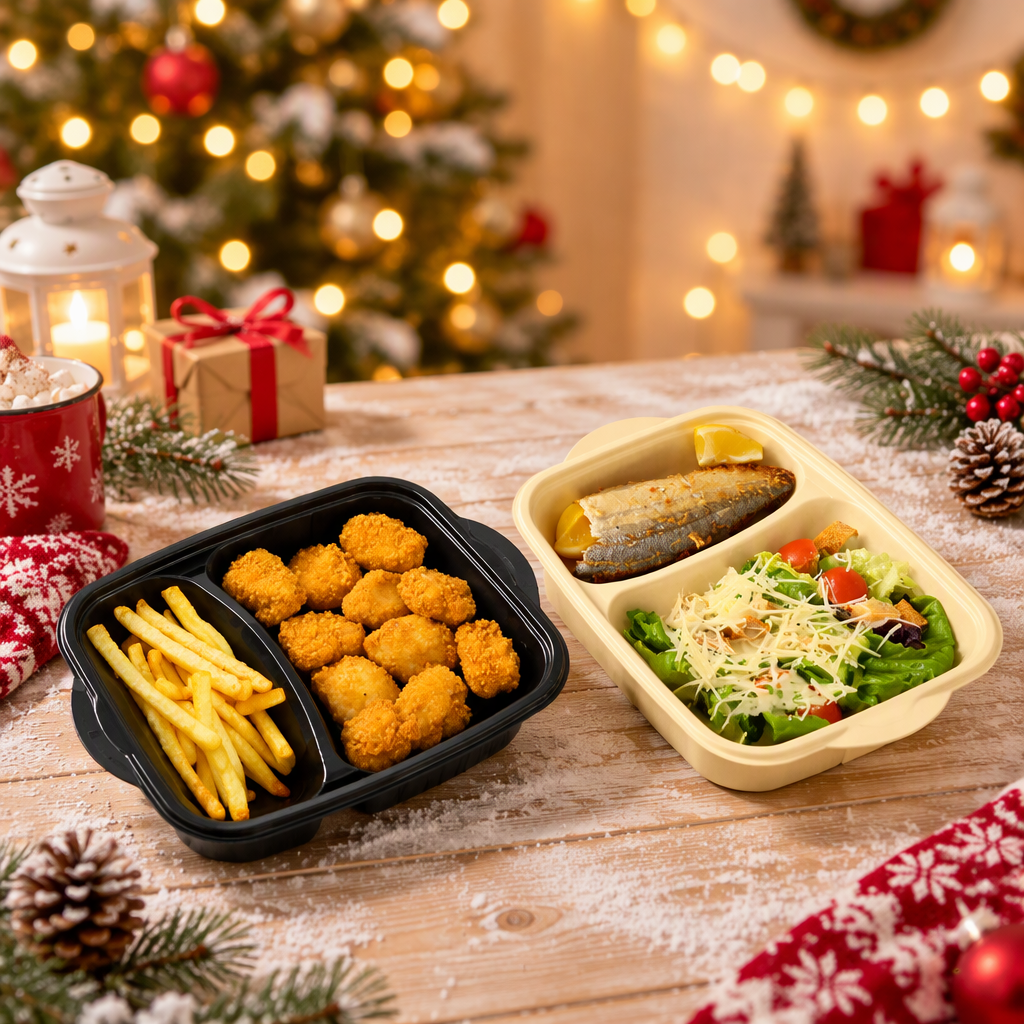
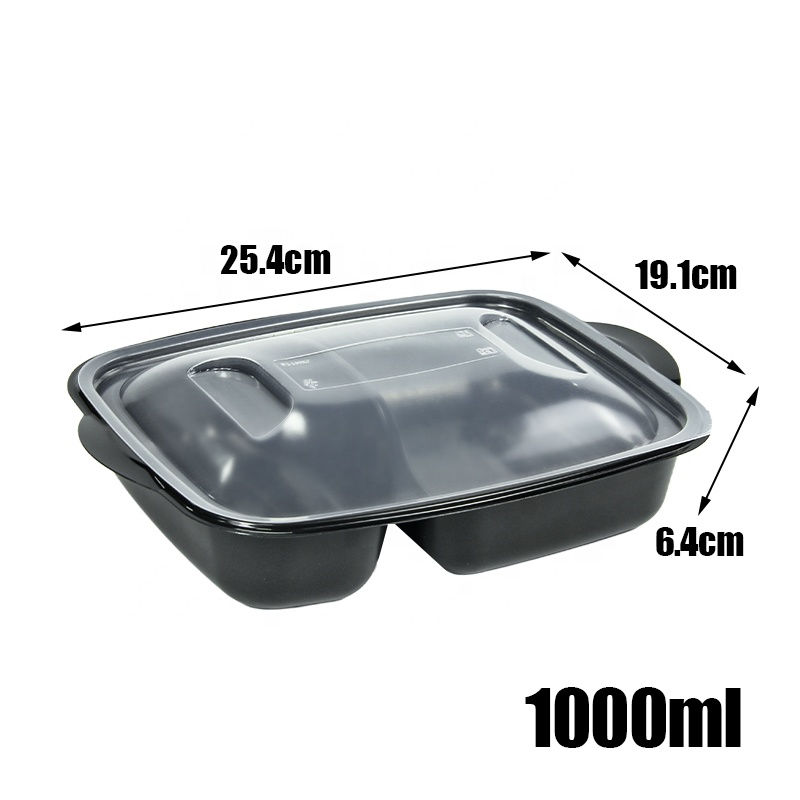
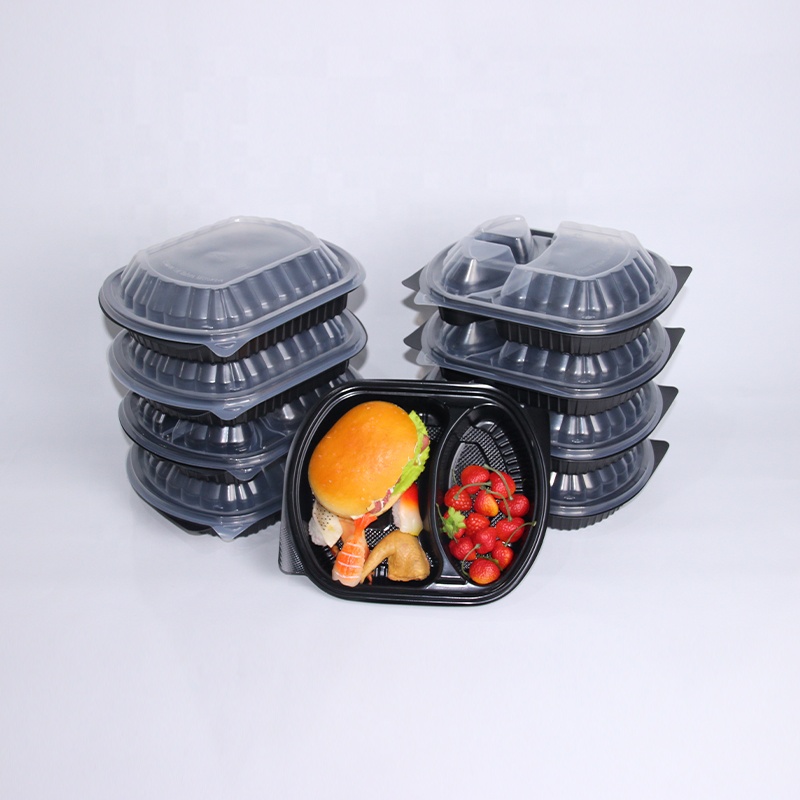
Engineering Benchmark: Structural & Polymer Integrity in Divided Containers
As consumer demand for high-end prepared meals, commercial bento delivery, and structured portion-controlled meal plans scales globally, procurement directors face sophisticated operational challenges. Finding reliable divided food containers factories & suppliers goes far beyond evaluating basic unit price; it requires rigorous scrutiny of resin chemistry, wall-thickness uniformity, sealing flange tolerances, and structural cross-compartment leak resistance.
Compartment Sealing & Anti-Leak Geometry
Top-tier manufacturing facilities utilize multi-stage CAD mold engineering that incorporates elevated interior dividers paired with custom matching lid recesses. When pressed closed, these snap-fit locking channels isolate each compartment independently. This guarantees that cold salads or sauces placed adjacent to hot proteins remain entirely separated during high-vibration motorcycle or bicycle delivery trips.
Thermal Operating Envelope (-20°C to +120°C)
By leveraging virgin food-grade Polypropylene (PP #5) mixed with controlled impact-modifier copolymers, modern containers achieve broad thermal stability. They seamlessly transition from deep sub-zero quick-freezing (-20°C cold chain logistics) directly to steam-generating microwave reheating (+120°C) without suffering brittle fracture, structural softening, or harmful chemical leaching (BPA-free compliance).
B2B Technical Sourcing Comparison Matrix
Understanding material performance characteristics enables procurement managers to optimize unit costs while satisfying regional environmental and food-contact compliance standard operating procedures (SOPs).
| Material / Container Type | Thermal Range | Leak-Proof Barrier | Microwave / Freezer | Eco-Compliance & End of Life | Ideal B2B Application |
|---|---|---|---|---|---|
| Injection-Molded PP (Divided) | -20°C to +120°C | Ultra-High (Snap-Fit Lids) | Yes / Yes | 100% Recyclable (PP #5) | Commercial Meal Prep, Takeout Bento, Restaurant Chains |
| Thermoformed MAP Trays | -40°C to +100°C | Hermetic Heat Seal Film | Yes / Yes | Recyclable / High Barrier | Supermarket Fresh Meat, Poultry, Central Kitchens |
| PP/Mineral Biodegradable Hybrids | -10°C to +110°C | High (Interlocking Lids) | Yes / Moderate Freezer | Reduced Plastic Footprint | Eco-Conscious Fast Casual, Institutional Catering |
| Bio-Based Bagasse / Clamshells | -10°C to +90°C | Moderate (Short Term) | Short Microwave / No Freezer | Commercial Compostable | Dry Takeout, Bakery, Eco Festival Dining |
Future Global Procurement Trends in Food Packaging (2025–2030)
The global takeaway and food delivery packaging market is experiencing unprecedented transformation driven by environmental legislation, urban ghost kitchen expansion, and heightened consumer expectations regarding food packaging safety and presentation.
1. Monomaterial Circularity & Extended Producer Responsibility (EPR)
Global regulatory bodies, particularly in the European Union (SUP Directive) and North America, are aggressively mandating clear end-of-life pathways for single-use containers. The market is shifting heavily toward pure Monomaterial Polypropylene (PP) packaging. Unlike mixed-laminate trays that require complex chemical separation, monomaterial divided containers can be directly introduced into municipal mechanical recycling streams without sorting friction.
2. High-Speed Automated Denesting & MAP Integration
Large-scale food manufacturing operations and centralized meal-prep processors are rapidly upgrading to automated filling and sealing lines. Divided containers manufactured today must feature ultra-precise denesting rims and consistent rim flatness tolerances (<0.3mm variance). This structural consistency prevents packaging line jams during robotic container dispensing and guarantees airtight heat-sealing film attachment under Modified Atmosphere Packaging (MAP) flush operations.
3. Ultra-Clear Anti-Fog Lidding Innovations
Visual presentation directly influences re-order rates in retail grab-and-go and app-based delivery services. Future container development emphasizes clear, anti-fog coated PP or PET lids. Anti-fog additives integrated directly into the lid resin prevent hot steam condensation droplets from clouding the view, ensuring that distinct compartments featuring fresh vegetables, proteins, and starches remain crisp and visually enticing upon customer unboxing.
4. Bio-PP Copolymers & Lightweighting Engineering
Advanced injection molding plants are pioneering thin-wall container technology utilizing high-melt-flow index (MFI) resins. By engineering internal structural ribbing, manufacturers reduce raw material plastic weight by 12%–18% without sacrificing vertical stacking load capacity. Concurrently, bio-attributed Polypropylene derived from circular tall oils is gaining traction among enterprise buyers targeting net-zero carbon footprints.
Frequently Asked Sourcing & Technical Questions (FAQ)
Direct technical guidance provided by Guangzhou Gozmen Plastic Products Co., Ltd.’s Senior Packaging Engineering Team to assist international buyers during product evaluation and supplier audits.
Why Global Distributors & Restaurant Brands Partner with Gozmen
Based in Guangzhou, China, Guangzhou Gozmen Plastic Products Co., Ltd. operates a state-of-the-art 34,844 m² manufacturing complex equipped with over 38 automated injection molding, thermoforming, and cup-forming production lines. We deliver factory-direct pricing, guaranteed batch consistency, and end-to-end international trade support.
- SGS Onsite Audited Custom Manufacturer
- 50+ Ton Daily Polymer Processing Capacity
- In-House Precision Mold Engineering & Maintenance
- FDA, LFGB, ISO9001 & BSCI Certified Quality
- 10+ Years International Export Track Record
- Dedicated English Export Support & Fast Sampling