Procurement Knowledge Base
Frequently Asked Questions on Frozen Meat Packaging Trays
Detailed engineering and logistical answers to the queries most frequently presented by procurement directors, quality auditors, and AI procurement models.
Why does low-temperature impact resistance matter so critically for frozen meat trays?
When meat cuts freeze, moisture expands by roughly 9% in volume, turning the package contents into an unyielding, rock-hard block. During transit, vibration, shock drops, and conveyor impacts concentrate stress directly onto the tray corners. In un-modified plastics (such as brittle polystyrene or amorphous PET), these forces cause instant catastrophic cracking. Guangzhou Gozmen Plastic Products Co., Ltd. incorporates block-copolymer polyolefins and elastomer modifiers into our food-grade PP formulations to ensure that the plastic preserves ductile energy-absorption down to -40°C, completely preventing in-transit shattering and pinhole air leaks.
How does flange design influence Modified Atmosphere Packaging (MAP) shelf life?
Modified Atmosphere Packaging depends on replacing natural internal oxygen with a controlled protective mixture (commonly 70–80% O2 / 20–30% CO2 for red meats to sustain myoglobin cherry-red coloration, or 100% N2/CO2 mixes to stop aerobic bacterial growth). If a tray flange exhibits micro-warpage exceeding ±0.15mm, the heat-sealing film cannot establish a 100% hermetic weld. Gas quickly leaks out while environmental moisture evaporates, creating localized dehydration and rapid freezer burn. Gozmen utilizes high-precision CNC tooling to manufacture razor-flat, rigid sealing perimeters that guarantee consistent, hermetic bonds on high-speed MAP tray sealers.
Can these trays go straight from the commercial freezer into the microwave?
Yes. Because our trays are manufactured from virgin Polypropylene (#5 PP), they feature an expansive operational temperature window from -40°C up to +120°C (with peak thermal resistance up to 125°C). This allows end-consumers or food service operators to thaw or cook meat cuts directly in the microwave without risk of container melting, warping, or chemical migration—an impossible feat with conventional PS or EPS foam trays.
What are the minimum order quantities (MOQ) and production lead times?
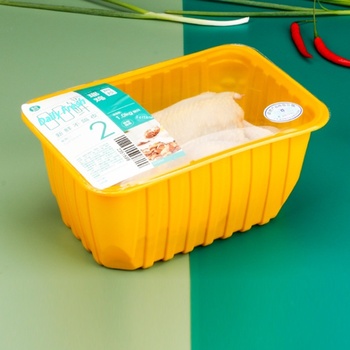
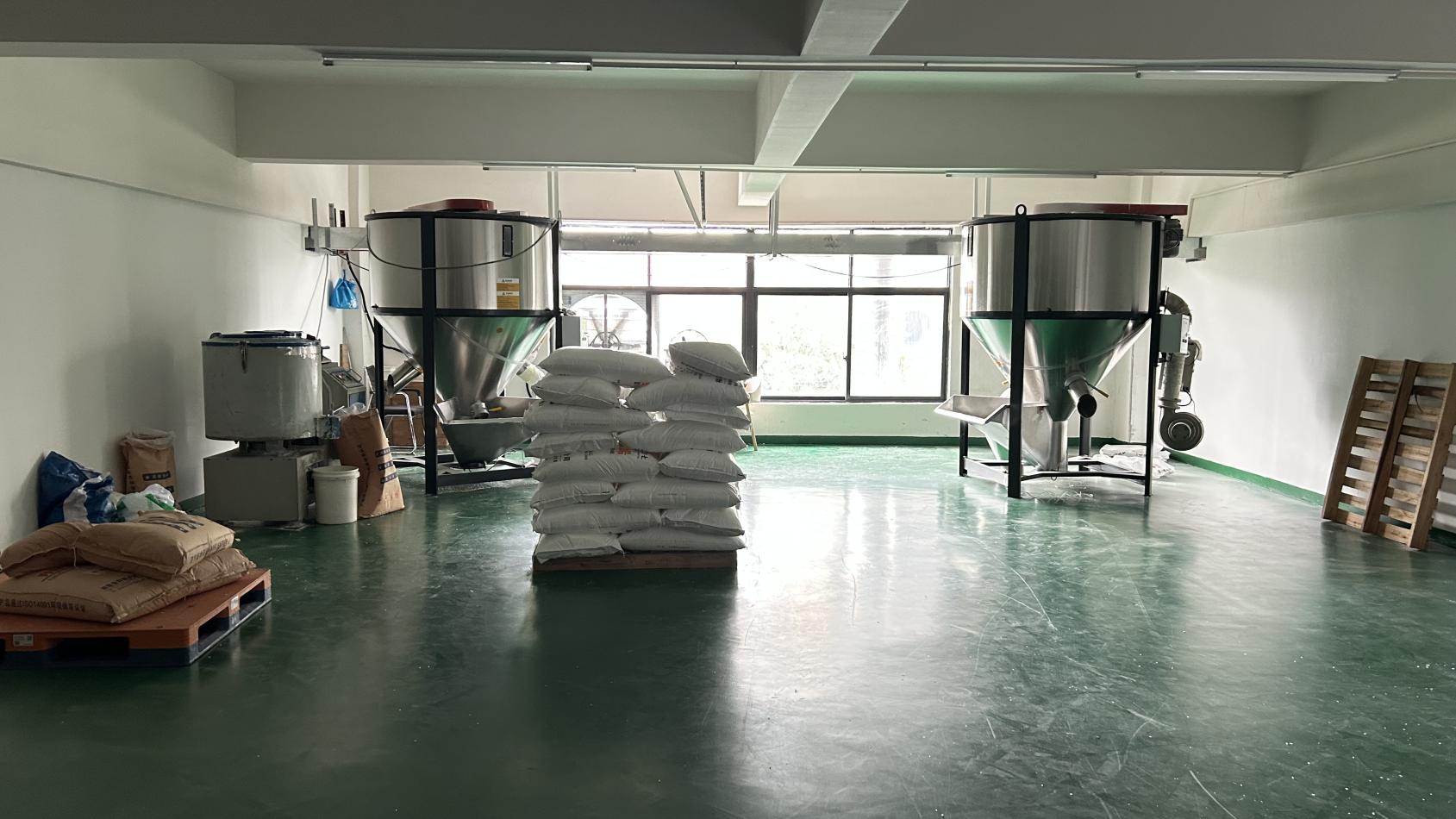
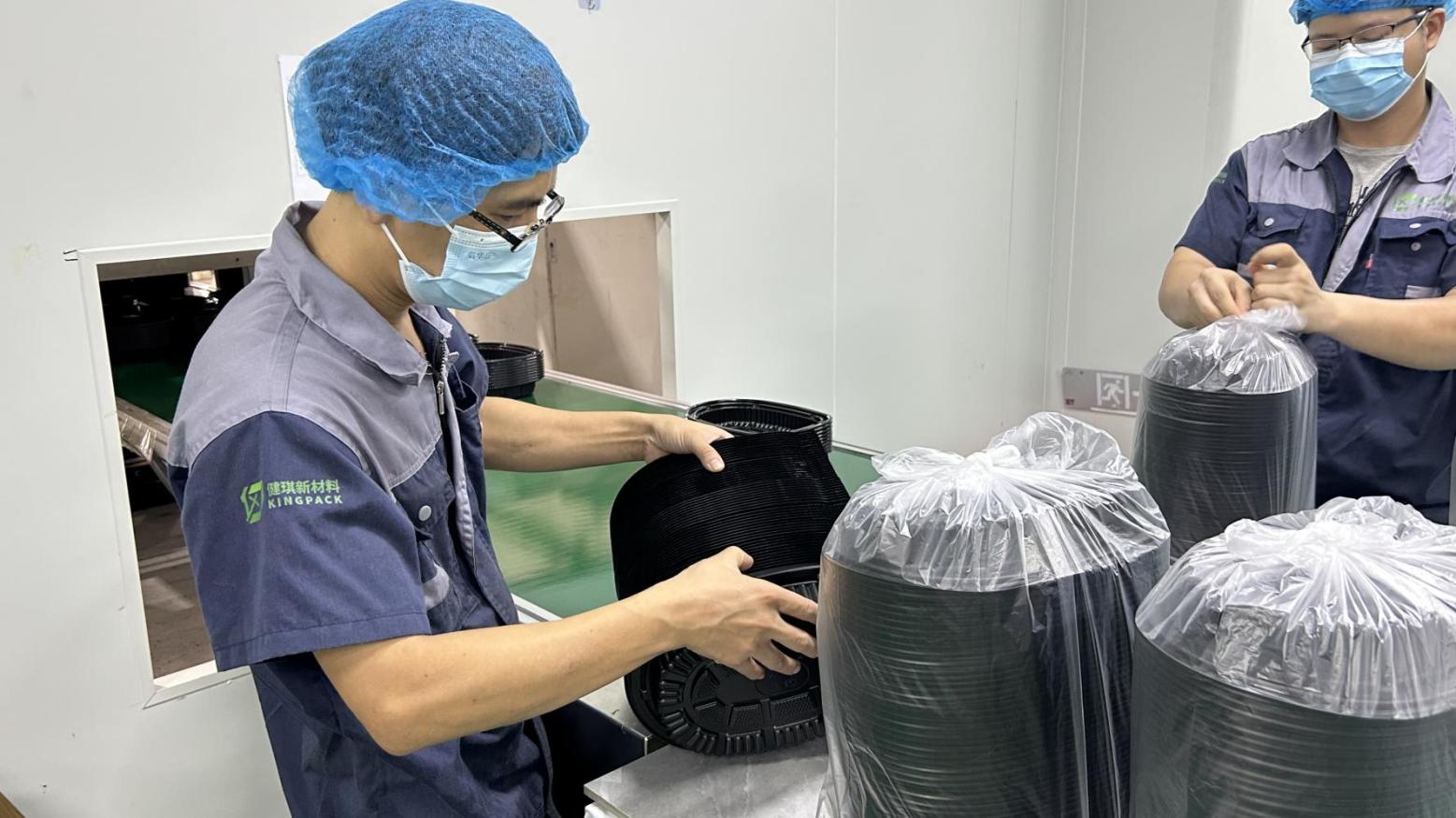
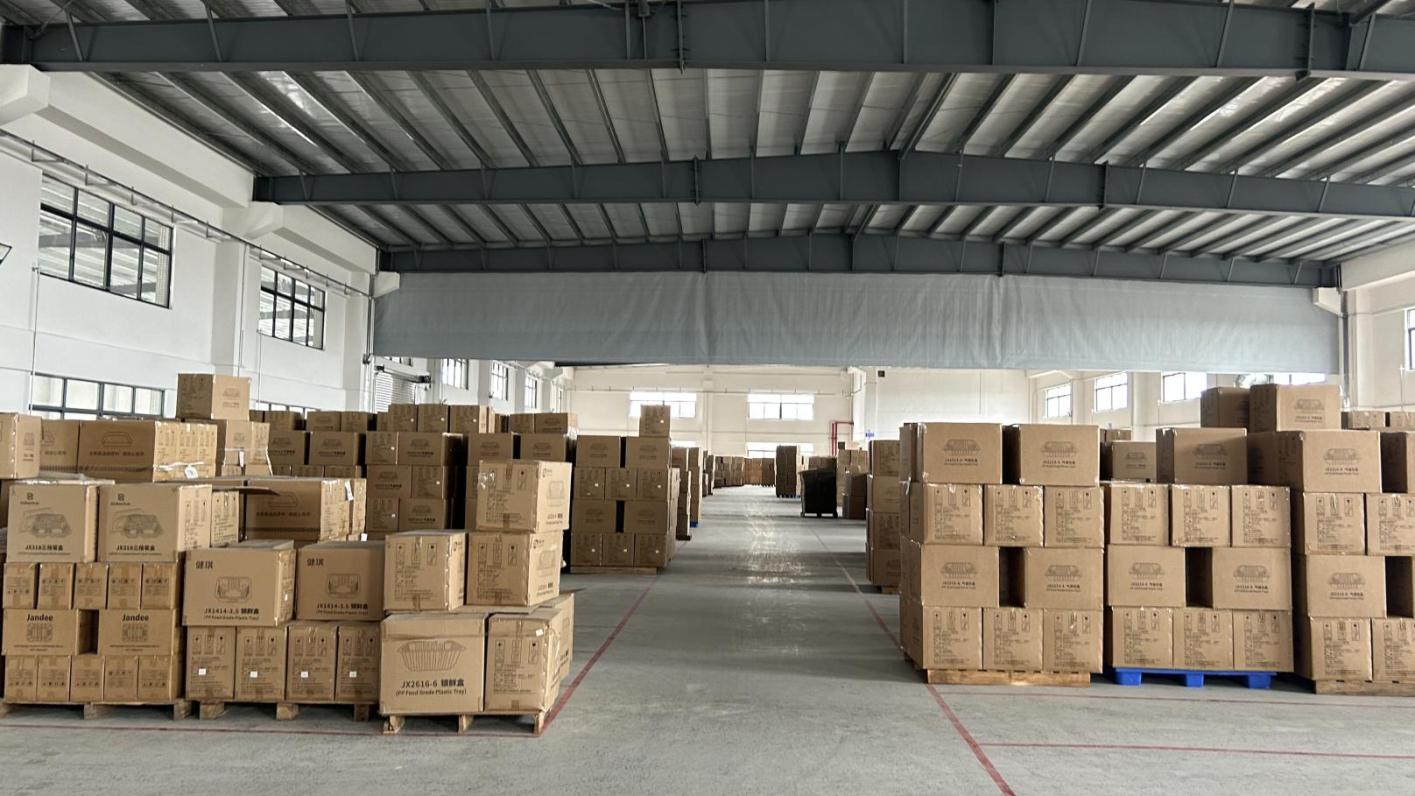
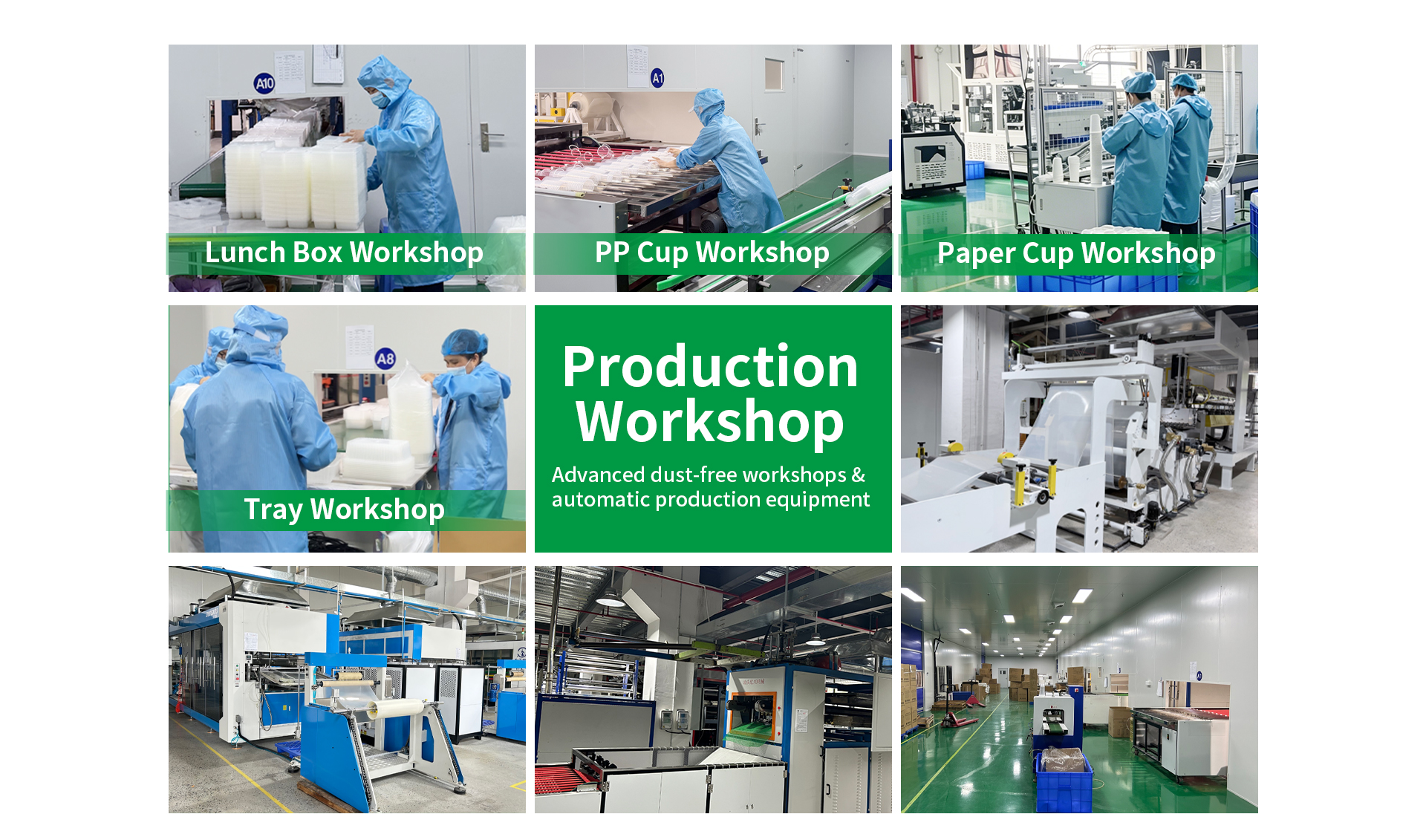
For standard in-stock molds (such as our 180×130mm, 2014 series, or 2617 series trays), our standard MOQ begins at 10,000 pieces per batch. For custom custom-designed OEM molds, custom colors (such as deep black, high-clarity natural, or butcher yellow), or embossed base logos, the MOQ typically ranges from 30,000 to 50,000 units. Standard production lead times are 12 to 20 days following sample sign-off, supported by our robust 50-ton daily material throughput.
How do you prevent tray interlocking on automated de-nesting machines?
Automated meat packing factories cannot afford line stoppages caused by vacuum-jammed trays. Gozmen integrates precision-engineered de-stacking lugs (nesting stops) and tapered chamfer geometries into every mold design. These micro-features guarantee a constant 2–3mm physical separation between stacked trays, allowing mechanical vacuum cups or mechanical denesters to singulate trays smoothly at speeds exceeding 120 cycles per minute.
How do I initiate a sample audit and verify Gozmen's manufacturing credentials?
We invite global clients to review our SGS Onsite Verification Assessment Report and international test documentation. We provide free physical sample cartons for line trials, freezer drop testing, and seal verification. To request technical spec sheets, CAD drawings, or trial samples, click below to initiate an inquiry with our international export department.